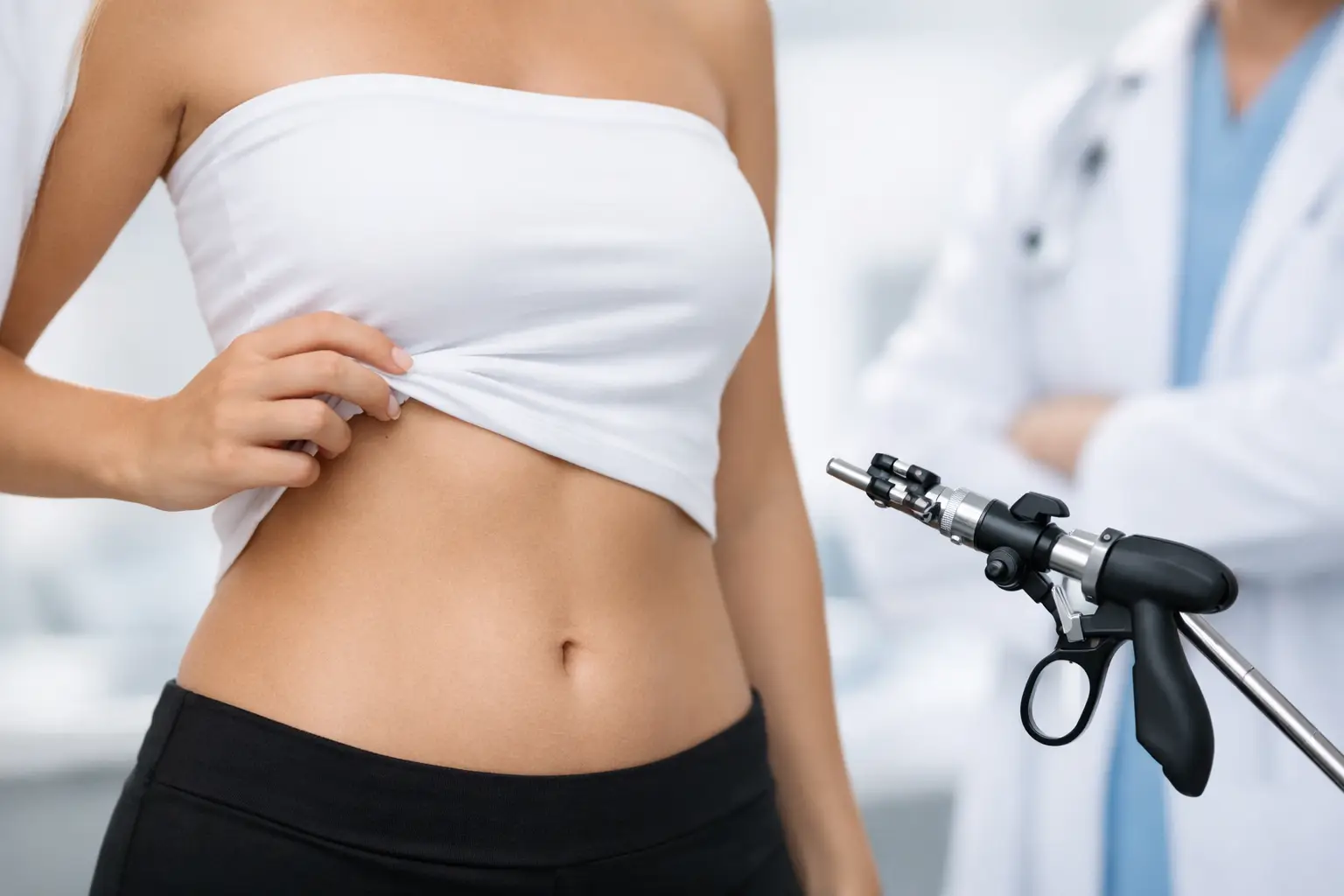

You have probably seen the phrase and paused at the same point many patients do: is scarless sleeve really scarless? It is a fair question, because when you are already weighing up major decisions about weight-loss surgery, the last thing you need is marketing language that sounds better than it feels in real life.
The honest answer is no – not usually in the literal sense. A scarless sleeve is generally not completely free of marks. What the term usually means is that the operation is performed through the belly button area in a way that avoids several visible cuts across the abdomen, or keeps any marks much less noticeable than standard laparoscopic surgery. For many patients, that difference matters. But it helps to go in with clear expectations.
What does scarless sleeve actually mean?
In bariatric surgery, a standard gastric sleeve is usually carried out laparoscopically through a few small incisions in the abdomen. These cuts are already much smaller than those used in older open surgery, which is one reason recovery tends to be quicker and scarring is reduced.
When people ask, “is scarless sleeve really scarless”, they are usually referring to a single-incision or near-hidden-incision approach. In practical terms, the surgeon may work through the navel so that the scar sits within the natural folds of the belly button and becomes harder to spot once healed. Some techniques may still require a tiny additional incision for safety or better access, depending on the patient’s anatomy and the surgeon’s judgement in theatre.
So the word “scarless” is best understood as “minimal visible scarring” rather than “no scar at all”.
Why the term can be misleading
This is where nuance matters. Every time the skin is cut, the body heals by forming scar tissue. That is simply how healing works. Even when an incision is very small and placed in a discreet area, the tissue still goes through the same biological repair process.
That does not mean the result will be obvious or bothersome. In many cases, once healing is complete, the mark is difficult to see unless you are looking closely. But saying a procedure is fully scarless can create an expectation that there will be no sign whatsoever, and that is not the most accurate way to describe it.
For patients already feeling anxious about surgery, realistic language matters. A good surgical team should explain not only the cosmetic appeal of this technique, but also where incisions are likely to be, whether an extra port may be needed, and how scar appearance varies from person to person.
Is scarless sleeve really scarless for every patient?
No, and this is one of the biggest points to understand before choosing it.
Not every patient is an ideal candidate for a single-incision or hidden-incision sleeve. Previous abdominal surgery, body shape, liver size, BMI, fat distribution, hernias, and overall surgical complexity can all affect whether this approach is appropriate. In some cases, a surgeon may plan for a scar-minimising technique but decide during the operation that an extra incision is the safer option.
That is not a failed procedure. It is good surgical decision-making.
The priority should always be safety, visibility, control of instruments, and the ability to complete the sleeve gastrectomy properly. A tiny scar is not worth compromising the quality of the operation. Experienced bariatric surgeons know when cosmetic goals can be achieved safely and when they should not be pushed.
How visible are the scars in reality?
For most patients, the marks from any laparoscopic bariatric procedure are already relatively small. With a scarless sleeve approach, the main difference is where those marks are placed and how noticeable they are later.
If the incision sits within or around the navel, it often blends into the natural contour of the area as healing progresses. Some patients are genuinely delighted with how discreet it looks after a few months. Others still notice a faint line, firmness in the tissue, or a slight change in the shape of the belly button.
Your final scar appearance depends on several factors: your skin type, how your body heals, whether you are prone to raised scars, how well post-operative instructions are followed, and whether there are any wound issues during recovery. Smoking, diabetes, infection risk, and nutritional status can also affect healing.
This is why two patients can have the same operation and end up with very different-looking scars.
The cosmetic benefit is real – but it is not the main benefit
It is understandable to care about visible scars. Many bariatric patients are already self-conscious about their bodies, and wanting a more discreet result is not vanity. It is a personal part of feeling comfortable in your skin.
Still, the main value of sleeve surgery is not cosmetic. It is the chance to improve health, mobility, confidence, and day-to-day quality of life. If a less visible incision technique can be offered safely, that may be a welcome extra. But it should sit behind the bigger questions: is this the right operation for you, is the surgeon experienced in this method, and are the hospital and aftercare processes strong enough to support a safe recovery?
Patients often feel calmer when the decision is framed this way. The scar matters, but the outcome matters more.
What to ask before booking a scarless sleeve
If you are considering this procedure, ask direct questions and expect direct answers. Ask whether the technique is truly single-incision, whether extra ports are sometimes needed, and how often that happens in the surgeon’s own practice. Ask to see realistic healed results rather than immediate post-op photos.
You should also ask how the team decides who is suitable. A responsible answer will include clinical criteria, not just sales language. The best coordinators and surgeons will explain what is ideal, what is possible, and what may need to change on the day for safety reasons.
This matters even more if you are travelling abroad for treatment. When your surgery, hotel, hospital stay, transfers, pre-op testing and follow-up are all being arranged as part of one pathway, clear communication becomes part of the treatment itself. A well-supported patient is usually a less anxious patient.
Recovery and scar care still matter
Even with minimal incisions, healing is not something to ignore. You will still need to follow wound care advice carefully, keep the area clean and dry as instructed, attend follow-up checks, and report anything unusual such as redness, discharge, increased pain or fever.
Once the incision has healed properly, your team may advise when scar massage or silicone-based products are appropriate. That advice varies, and timing matters, so do not start applying products too early without checking first.
It is also worth remembering that early scars nearly always look more noticeable before they settle. Pinkness, firmness and slight swelling can improve over time. Judging the final result too quickly causes unnecessary worry.
Is scarless sleeve really scarless – and does that mean it is better?
Not automatically. It may be the better option for some patients, especially if they are suitable candidates and place high value on minimising visible abdominal marks. But it is not inherently superior simply because it sounds more advanced.
Single-incision surgery can be technically demanding. In the right hands, that can be managed very well. But the right surgeon, patient selection, and hospital setting matter more than the label used to describe the operation. For some patients, a standard laparoscopic sleeve may be the more appropriate route and still leave only small, neat scars.
At Bridge Health Travel, this is the kind of question we encourage patients to ask early, because confidence tends to grow when expectations are realistic rather than idealised. Most people do not need perfect wording. They need a straight answer, a safe plan, and a team that keeps them informed at every stage.
If you are considering a scarless sleeve, think of the term as shorthand, not a promise. The goal is usually fewer or better-hidden marks, not a body with no trace of surgery at all. And for most patients, once the weight starts to come off, movement gets easier, and health begins to improve, that distinction feels much less troubling than it did at the start.