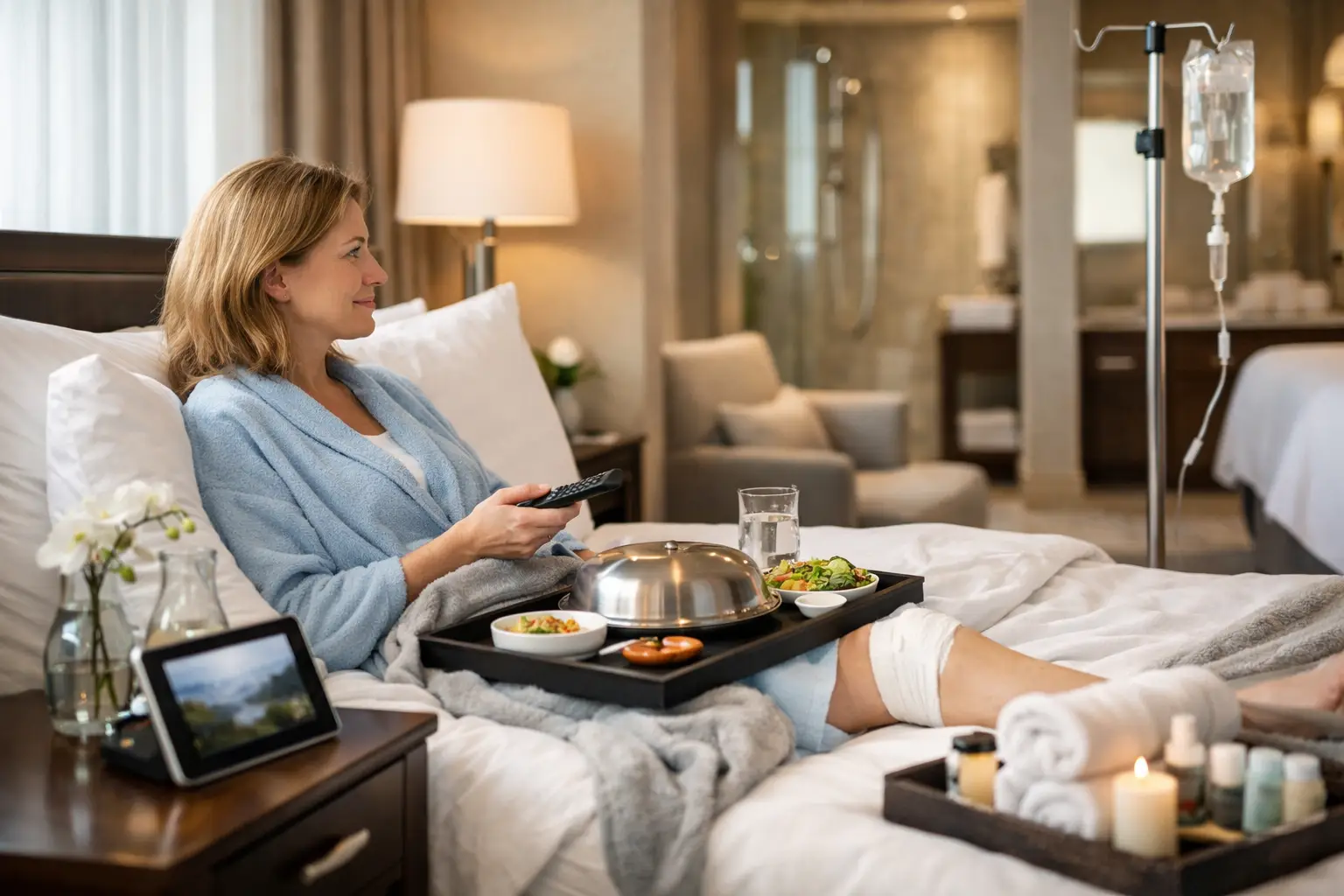

Leaving hospital after bariatric surgery can feel like a big step. You may be relieved that your procedure is complete, but also tired, sore and unsure how comfortable the next few days will be. The best hotel features after surgery are not about luxury for its own sake. They are about protecting your rest, making short walks safer and ensuring help is close by when you need it.
For patients travelling from the UK or Ireland to Antalya for gastric sleeve, bypass or revision surgery, a suitable hotel is part of the recovery plan. It should work alongside the surgeon’s discharge instructions, not replace medical care. A good coordinator will arrange accommodation with the practical details already considered, so you are not trying to solve problems while recovering.
Best hotel features after surgery: start with location
After surgery, a beautiful hotel far from the hospital can quickly become inconvenient. Follow-up appointments, unexpected questions and the journey to the airport are all easier when your accommodation is within a sensible distance of the hospital and medical team.
A short transfer matters more than it may seem. Getting in and out of a vehicle can be uncomfortable in the first days after abdominal surgery, particularly if you are bloated from surgical gas or moving cautiously around incision sites. Reliable pre-arranged transport also removes the pressure of navigating an unfamiliar city, finding a taxi or explaining your needs when you are not feeling your best.
Location should be balanced with surroundings. A central hotel can offer easier access to services, but a noisy street, busy nightlife area or long walk from the entrance to your room may not be ideal. The right choice is usually calm, accessible and close enough to your planned clinical appointments.
A room that makes recovery easier
A recovery-friendly room needs space for slow, comfortable movement. You should be able to get from the bed to the bathroom without squeezing around luggage or furniture. After bariatric surgery, regular gentle walking is often encouraged by your clinical team to support circulation and recovery. A clear route around the room makes those short walks less intimidating.
A lift is essential if your room is above ground level. Even if you normally use stairs without a thought, avoid depending on them in the early post-operative period. It is also worth checking that the hotel entrance, reception and lift can be reached without a long incline or multiple steps.
The bed matters too. A supportive bed at a practical height is generally easier to get in and out of than a very low, soft bed. Many patients find it more comfortable to rest slightly upright at first, so extra pillows can be useful. If you use a CPAP machine for sleep apnoea, make sure there is an accessible plug socket near the bed and room for the equipment.
Temperature control is another small detail with a large effect. Feeling too warm, cold or stuffy can make an already disrupted night harder. A room with working air conditioning or controllable heating helps you settle, particularly during warmer months in Turkey.
A private bathroom with practical safety details
You should not have to walk far for the bathroom, and it should be easy to use when you are tired. A private en-suite bathroom is preferable, with good lighting and a non-slip shower area. A walk-in shower is often more manageable than climbing into a high-sided bath.
You may not need formal mobility aids, but grab rails, a stable shower surface and towels within easy reach can be reassuring. If a bathroom has a slippery floor or an awkward shower entry, tell your coordinator before your stay if possible. A simple room adjustment can prevent an unnecessary fall.
Hydration and food support are not optional extras
In the first stage after bariatric surgery, your prescribed fluids and diet plan take priority over a hotel’s usual menu. Your hospital team will tell you what and how much to drink, and when to progress through liquids or other stages. Do not assume that an all-inclusive buffet is helpful simply because food is always available.
The useful hotel features are reliable access to bottled water, a kettle if permitted and appropriate, a mini-fridge for approved drinks, and staff who can respond to simple requests. You may only manage very small sips at a time. Keeping your allowed fluids close to hand makes it easier to follow the plan without repeatedly going downstairs.
A hotel restaurant can still be convenient for a travelling partner, but your needs may be different. Ask in advance whether staff can provide plain options, broth or specific drinks if your care team has approved them. The goal is not to create a special holiday menu. It is to avoid confusion and make your post-operative instructions easier to follow.
Quiet, cleanliness and dependable service
Recovery is not always dramatic. Often, it is a series of naps, short walks, fluids, medication reminders and gradual improvements. That routine is much easier in a clean, quiet room where housekeeping is dependable and you are not woken by late-night noise.
A 24-hour reception is valuable because practical needs do not always happen during daytime hours. You may need additional water, help contacting your driver, clean bedding after nausea, or a quick answer about the lift or air conditioning. Hotel staff are not a substitute for your surgeon or nursing team, but responsive service can remove avoidable stress.
For this reason, it helps to distinguish between a hotel with attractive photographs and one with recovery-ready operations. A rooftop pool, large breakfast spread or entertainment programme may be enjoyable for a companion. They do not matter as much as cleanliness, quiet, room access, helpful staff and an organised transfer plan.
Your companion needs a workable stay too
Many patients travel with a partner, family member or friend. Their presence can provide emotional reassurance and practical help, especially on the discharge day and at follow-up appointments. But they also need somewhere they can rest, eat and stay connected without leaving you isolated.
A room with enough space for two adults, a nearby café or dining option, Wi-Fi and a comfortable chair can make a real difference. Your companion may be managing calls home, arranging small essentials or simply sitting with you while you recover. When they are comfortable and informed, they are better able to support you calmly.
If you are travelling alone, this is where coordination becomes especially important. Before booking, confirm who will be available after discharge, how you contact them, how follow-up transport works and what to do if you feel unwell. At Bridge Health Travel, patients are supported by a coordinator who helps connect the hospital, hotel and transfer arrangements rather than leaving each part to chance.
Questions to ask before your hotel is confirmed
The best time to check hotel details is before you travel, not after you have been discharged. Your provider should be able to answer direct questions clearly. Ask whether there is a lift, whether the room has an en-suite bathroom, how far the hotel is from the hospital, and whether airport and follow-up transfers are included.
It is also sensible to ask about water access, a mini-fridge, room-service availability, late check-out if your flight timing requires it, and a contact number for your coordinator. If you have specific considerations, such as reduced mobility, CPAP use, travelling alone or an accompanying child, raise these early.
A few details deserve particular attention:
- Is the route from the vehicle to the room short and step-free or lift-accessible?
- Can you contact a coordinator promptly if you have a non-emergency question?
- Will your hotel stay allow you to attend planned checks without stressful travel?
- Does the room give you a quiet, clean place to follow your fluid, medication and walking routine?
Comfort should never come before clinical advice
Even an excellent hotel cannot tell you whether a symptom is normal after surgery. Follow the discharge guidance given by your surgeon and hospital, attend every scheduled check, and contact your medical team promptly if you have concerning pain, persistent vomiting, fever, shortness of breath, chest pain, worsening weakness or any symptom you have been advised to report.
The hotel’s role is simpler but still meaningful: it gives you a stable place to rest between clinical milestones. When accommodation, transfers and follow-up care are planned as one journey, you can spend less energy on logistics and more on taking each careful step towards recovery.