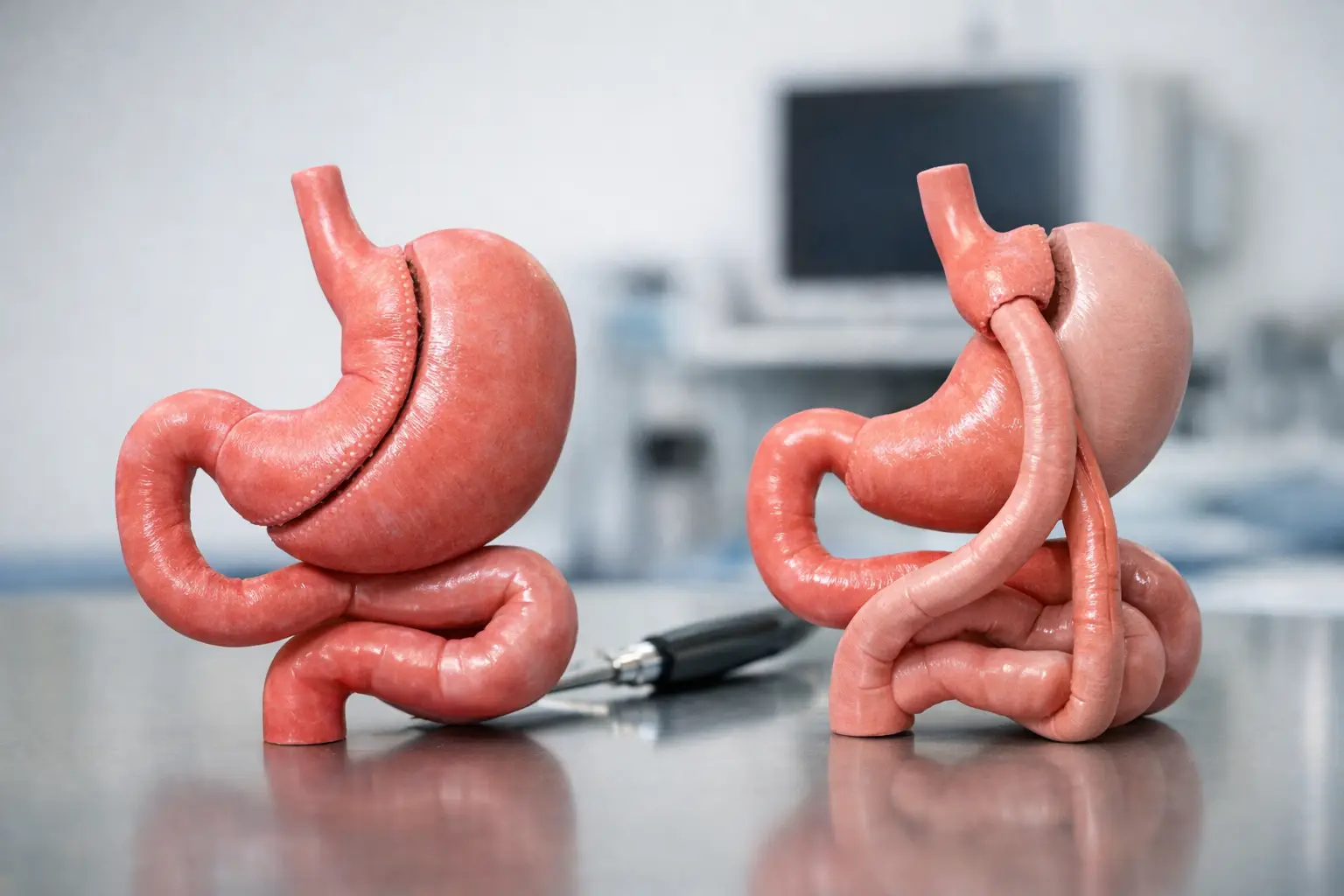

For many people considering bypass surgery, the hardest question is not whether they are ready for treatment. It is which operation will give them the best balance of weight loss, health improvement and long-term comfort. OAGB versus Roux-en-Y bypass is a conversation about more than technique: it is about reflux, nutritional needs, previous surgery, eating patterns and the support available after you go home.
Both procedures can be highly effective options for people living with obesity and related conditions such as type 2 diabetes, high blood pressure or sleep apnoea. Neither is automatically “better”. The right choice should follow a detailed assessment with a qualified bariatric surgeon who understands your medical history and explains the trade-offs clearly.
What is OAGB?
OAGB stands for one-anastomosis gastric bypass. It is also commonly called mini gastric bypass, although it is not a minor operation. During the procedure, the surgeon creates a long, narrow stomach pouch and connects it to a section of the small bowel using one connection, known medically as an anastomosis.
This changes how much food you can comfortably eat and reduces the length of bowel that food travels through before nutrients are absorbed. The combination of restriction and reduced absorption can support substantial weight loss. It can also improve metabolic conditions, particularly when insulin resistance or type 2 diabetes is present.
Because there is one bowel connection rather than two, OAGB is often technically more straightforward and may take less operating time in suitable patients. That does not make it a shortcut. It still requires careful pre-operative screening, hospital monitoring and lifelong commitment to supplements, blood tests and dietary habits.
What is Roux-en-Y gastric bypass?
Roux-en-Y gastric bypass, often shortened to RYGB, creates a small stomach pouch and connects it to a limb of the small bowel. Food then bypasses the larger part of the stomach and the first section of the small intestine. A second bowel connection allows digestive juices to meet food further down the bowel.
Like OAGB, Roux-en-Y works through both restriction and malabsorption. It has been performed for decades and has a substantial body of long-term evidence behind it. It is particularly familiar to many bariatric teams and may be recommended where acid reflux is a major concern.
The procedure is more complex because it involves two connections. Recovery still follows a similar bariatric pathway: early mobilisation, fluids in small sips, gradual food stages and regular clinical follow-up. Your individual recovery, however, depends on your health, the surgery itself and how well you can maintain hydration and nutrition.
OAGB versus Roux-en-Y bypass: the main differences
The most visible surgical difference is the number of bowel connections. OAGB has one, while Roux-en-Y has two. More importantly for patients, the operations handle bile, reflux and nutrient absorption differently.
Weight loss and metabolic improvement
Both operations generally produce significant weight loss and can lead to meaningful improvements in obesity-related illness. Some studies suggest OAGB may result in slightly greater average weight loss for certain groups, partly because of the degree of malabsorption. But averages are not a prediction of your own result.
Long-term outcomes depend heavily on the operation being matched to the patient, as well as consistent eating habits, activity, emotional support, vitamin use and follow-up. A procedure that produces faster weight loss is not necessarily the best choice if it creates nutritional difficulties that are hard for you to manage.
Reflux and bile reflux
Reflux is one of the most important decision points. Roux-en-Y is often considered a strong option for patients with significant gastro-oesophageal reflux disease, particularly when a sleeve gastrectomy would be less suitable. Its configuration is designed to reduce acid exposure to the oesophagus.
With OAGB, bile can potentially travel back towards the stomach pouch and oesophagus. Bile reflux is not the same as ordinary acid reflux and can be uncomfortable or persistent in some patients. While many people do well after OAGB, a history of severe reflux, Barrett’s oesophagus or certain upper digestive tract findings may make Roux-en-Y the safer recommendation. Your pre-operative assessment may include endoscopy or other investigations to help clarify this.
Nutritional requirements
All gastric bypass procedures require lifelong vitamin and mineral supplementation. Protein intake, iron, vitamin B12, folate, calcium and vitamin D need particular attention. Regular blood tests are not optional extras – they are a central part of keeping you well after surgery.
OAGB can have a stronger malabsorptive effect, depending on the length of bowel bypassed. This may help weight loss but can also raise the risk of protein-calorie malnutrition or vitamin and mineral deficiencies if supplements and follow-up are inconsistent. Roux-en-Y also carries nutritional risks, but the balance may be more appropriate for some patients.
If you have existing anaemia, low vitamin levels, inflammatory bowel disease, chronic diarrhoea, or you know that regular tablets and testing may be difficult to maintain, say so openly. These details influence safe procedure selection.
Dumping syndrome and eating comfort
Both operations can cause dumping syndrome, where food moves too quickly into the small bowel. Symptoms may include sweating, dizziness, palpitations, nausea, cramps or diarrhoea, especially after sugary foods. For many patients, it becomes a useful physical reminder to avoid high-sugar choices, but it can feel unpleasant.
Portion size will be much smaller after either procedure. You will need to eat slowly, chew thoroughly, prioritise protein and separate drinks from meals as instructed by your team. Some people find their relationship with food changes quickly; others need more time and structured psychological support to adapt.
Revision surgery and individual anatomy
A previous gastric sleeve, band, bypass or other abdominal surgery can change the decision. Roux-en-Y is commonly used as a revision procedure for severe reflux after a sleeve. OAGB may be considered in other revision situations, particularly where further weight loss is needed, but suitability depends on anatomy and the reason for revision.
This is why a one-size-fits-all recommendation is not good bariatric care. Your surgeon should review your weight history, medications, endoscopy findings, blood results, eating behaviours and previous operations before advising a pathway.
Questions worth asking at your consultation
A good consultation should leave you clearer, not pressured. Ask why one procedure is being recommended for you specifically, how your reflux history affects the choice, and what level of malabsorption is planned. You can also ask how often blood tests are needed, which supplements you will require, and what symptoms should prompt urgent medical advice after returning home.
If you are travelling for surgery, clarify the practical plan as carefully as the clinical one. You should know who coordinates your pre-operative tests, how long you will stay in hospital, who can translate if needed, how you will reach your hotel safely and how follow-up will work once you are back in the UK or Ireland. At Bridge Health Travel, that coordination is designed to give patients one clear point of contact alongside their surgical and hospital teams.
Choosing the bypass that supports your life after surgery
The safest decision is usually the one that accounts for your whole life, not simply the number on the scales. OAGB may be attractive when strong metabolic and weight-loss effects are the priority and reflux risk is low. Roux-en-Y may be favoured when reflux is established or when its longer clinical track record and bowel configuration better suit your circumstances.
Your operation is the beginning of a long-term treatment plan. Choose a surgeon and care pathway that will be honest about the compromises, organise the essentials around surgery, and remain available while you build new habits at home.