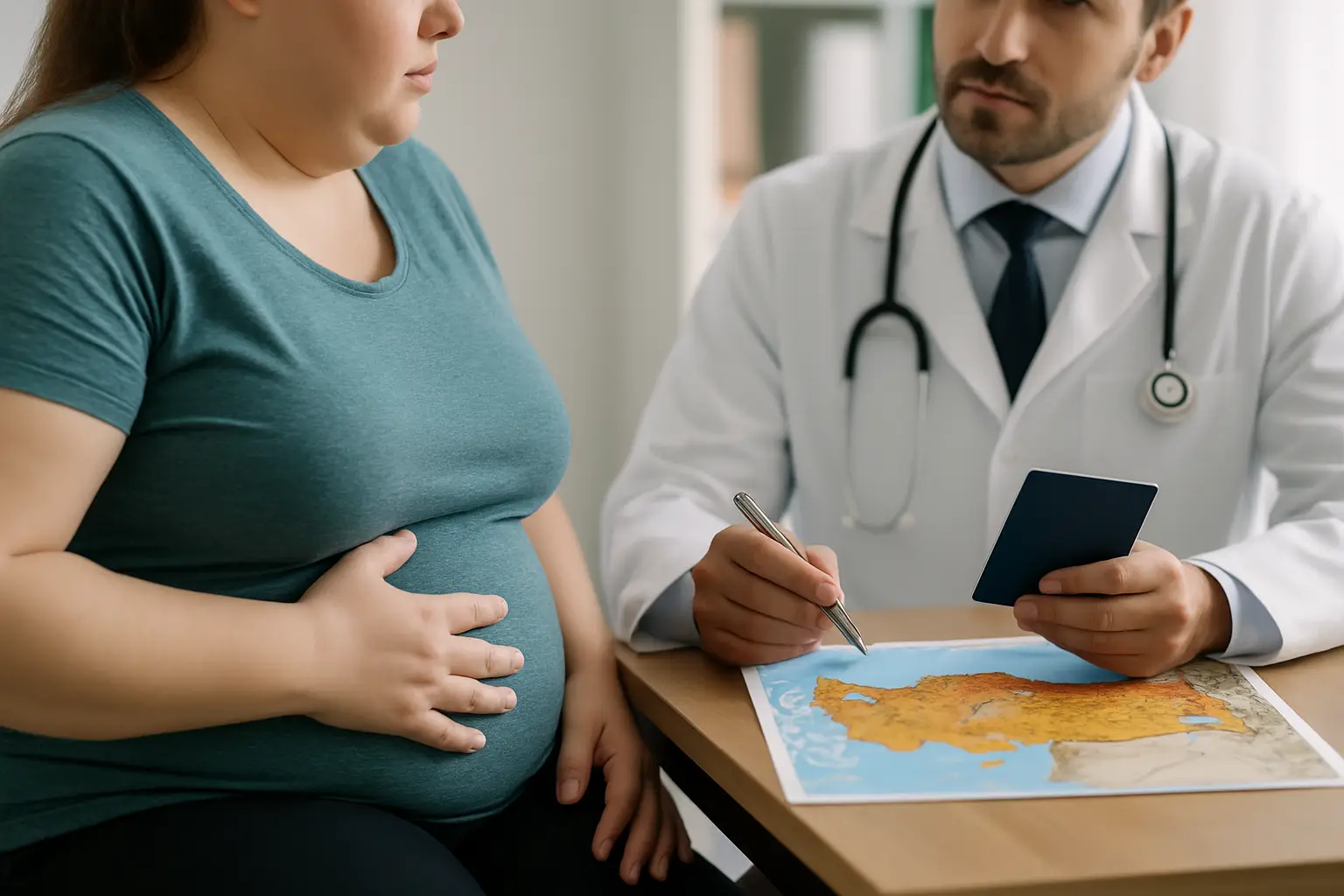

You do not worry about the operation first. You worry about everything around it.
Will someone meet you at the airport? What if your flight is delayed? Who explains the blood tests? What happens if you feel sick in the hotel? And when you get home, who answers the 2am message that starts with, “Is this normal?”
That is what most people mean when they search for bridge health travel. You are not only looking for a surgeon – you are looking for a reliable bridge between two worlds: your everyday life and a hospital abroad, your home GP and a clinical team in Turkey, your decision today and your aftercare weeks from now.
What “bridge health travel” really covers
Medical travel for bariatric surgery is often talked about like it is just a cheaper price and a plane ticket. In reality, it is a chain of small decisions and handovers – and those handovers are where anxiety lives.
Bridge health travel, done properly, is a coordination service that wraps around clinical care. The hospital and surgeon handle the medicine. The travel partner handles the practical reality of getting you to the right place, at the right time, with the right tests completed, with your questions answered in plain English.
For patients travelling to Antalya for a gastric sleeve, gastric bypass, mini gastric bypass, scarless gastric sleeve, gastric balloon, or a revisional procedure, the bridge matters because timing is tight. Pre-op tests need to happen promptly. Consent and instructions need to be crystal clear. Hydration, mobility, pain control, and diet progression need to be followed closely. And your companion – often a partner who is worried but trying to stay calm – needs to know what is happening next.
Why Antalya is such a common choice for bariatric travel
Antalya has become a major destination for bariatric surgery for a few practical reasons.
First, there is depth of experience. High-volume bariatric teams tend to have established routines: pre-op testing pathways, anaesthetic protocols, ward monitoring, and discharge education. Secondly, the hospitals serving international patients often have strong infrastructure – modern theatres, imaging, and inpatient facilities that feel familiar to UK and European travellers.
The third factor is speed. In the UK, many people face long waits or struggle to meet eligibility thresholds. Private care at home can be expensive. In Antalya, scheduling can often move much faster, which matters when you have reached the point of “I cannot live like this anymore” and you want a date you can plan around.
None of that removes the trade-offs. Travel adds complexity. You are away from your usual support network. Your home GP is not on the ward. If you do not have structured coordination, you can end up doing admin while anxious, in a foreign country, with a sore stomach and a strict drinking schedule. That is exactly what a proper bridge health travel model is designed to prevent.
The patient journey – what good coordination looks like
At its best, bariatric medical travel feels organised, not rushed. There is a clear pathway and a named person you can reach quickly.
It typically starts with gathering your health information – current weight and height, medical conditions, previous surgeries, medications, allergies, and any relevant history such as reflux symptoms or sleep apnoea. A trustworthy team will be direct about suitability. Sometimes the right choice is a different procedure than the one you first asked about. Sometimes it is delaying until a condition is better controlled. “It depends” is not a weakness here – it is a sign that safety comes first.
Once a procedure and date are agreed, coordination becomes the main value. Flights are your choice, but transfers are arranged so you are not negotiating taxis after a long journey. Hotel accommodation is selected to suit recovery, not nightlife. Hospital admission time is confirmed. Testing is scheduled. Translation and patient advocacy are available so you are never guessing what was said.
In hospital, you should expect a routine that feels calm and repeatable: baseline observations, bloodwork, ECG, and any imaging required. Your surgeon reviews results, answers questions, and confirms the plan. Post-op monitoring is not just a tick-box – it is pain management, early mobilisation, nausea control, and the start of a structured diet progression.
The final part is the part people underestimate: what happens after you leave Turkey. The surgery is a tool. The long-term result depends on adherence, hydration, protein intake, vitamin supplementation, and behaviour change. A bridge health travel service that includes aftercare check-ins can make the difference between feeling alone and feeling supported when real life starts again.
Picking the right procedure: outcomes, comfort, and trade-offs
The procedure is not a brand name. It is a set of trade-offs.
A gastric sleeve can be an excellent option for significant weight loss with a relatively straightforward anatomical change. For some patients it may worsen reflux, so your symptoms matter. A gastric bypass can be more suitable where reflux is a concern and can offer strong metabolic benefits, but it is a more complex reconstruction and has its own nutritional demands.
A mini gastric bypass can be appealing for its effectiveness and shorter operating time, but suitability depends on individual factors and surgeon preference. A gastric balloon is less invasive and can suit those who are not ready for surgery, yet it typically delivers more modest, less durable weight loss and may come with nausea and discomfort early on.
Revisional surgery is its own category. It can be life-changing, but it requires careful assessment because previous anatomy and scar tissue change the risk profile. Anyone offering it without detailed review is not treating it with the seriousness it deserves.
If you are unsure, that is normal. The right team will help you choose based on medical history, goals, eating behaviour, reflux, and your capacity to follow supplementation and follow-up.
Safety questions to ask before you book
People often feel awkward asking direct safety questions. Ask them anyway.
You should feel confident about who your surgeon is, what their experience is with your chosen procedure, where the surgery takes place, and what the hospital’s standards are for anaesthesia, infection control, and monitoring. You should know what pre-op tests are included and what would trigger a delay or cancellation.
It is also worth asking about the practical “what ifs”: what happens if your flight is delayed, if your companion needs support, if you need an extra night in hospital, or if you feel unwell after discharge. Clear answers reduce stress because you are not relying on hope.
What to pack – and what not to overthink
Packing for bariatric travel should be simple. Prioritise comfort and recovery.
Bring loose clothing, easy-on shoes for walking, and a small pillow for the journey home if you are worried about bumps. Bring your regular medications in original packaging. Do not bring a suitcase full of “just in case” items – you will be moving slowly at first, and clutter becomes annoying.
Most importantly, arrive mentally prepared to follow instructions, even when you feel fine. Early recovery is where small habits matter: sipping schedule, gentle walking, and not testing your limits with food.
The homecoming: aftercare is where confidence is built
The first few days back home can be surprisingly emotional. You are relieved, sore, proud, anxious, and tired – sometimes all at once.
This is where structured follow-up pays off. You want someone who will remind you that certain sensations are normal, who will coach you through fluid targets, who will check you are tolerating protein, and who will push you to seek local medical assessment if something does not look right. Good aftercare is not about telling you everything is fine. It is about responding quickly, asking the right questions, and taking action when needed.
It also supports the longer game. Weight loss surgery changes capacity, appetite, and absorption. It does not automatically change routines, emotional eating triggers, or social habits. Consistent check-ins help you translate the early “post-op motivation” into something sustainable.
If you are looking for a concierge-style, coordinator-led pathway for bariatric surgery in Antalya – including transfers, hotel support, hospital scheduling, pre-op testing coordination and aftercare check-ins – you can see how we organise the full journey at Bridge Health Travel.
A calm way to decide
If you are still in the research phase, set yourself a higher standard than “good reviews and a good price”. Look for a process that feels orderly, responsive, and medically grounded. The right bridge health travel experience should make you feel held – not hurried – because confidence is not created by promises. It is created by clear steps, answered questions, and the steady sense that you will not be left to figure things out on your own.