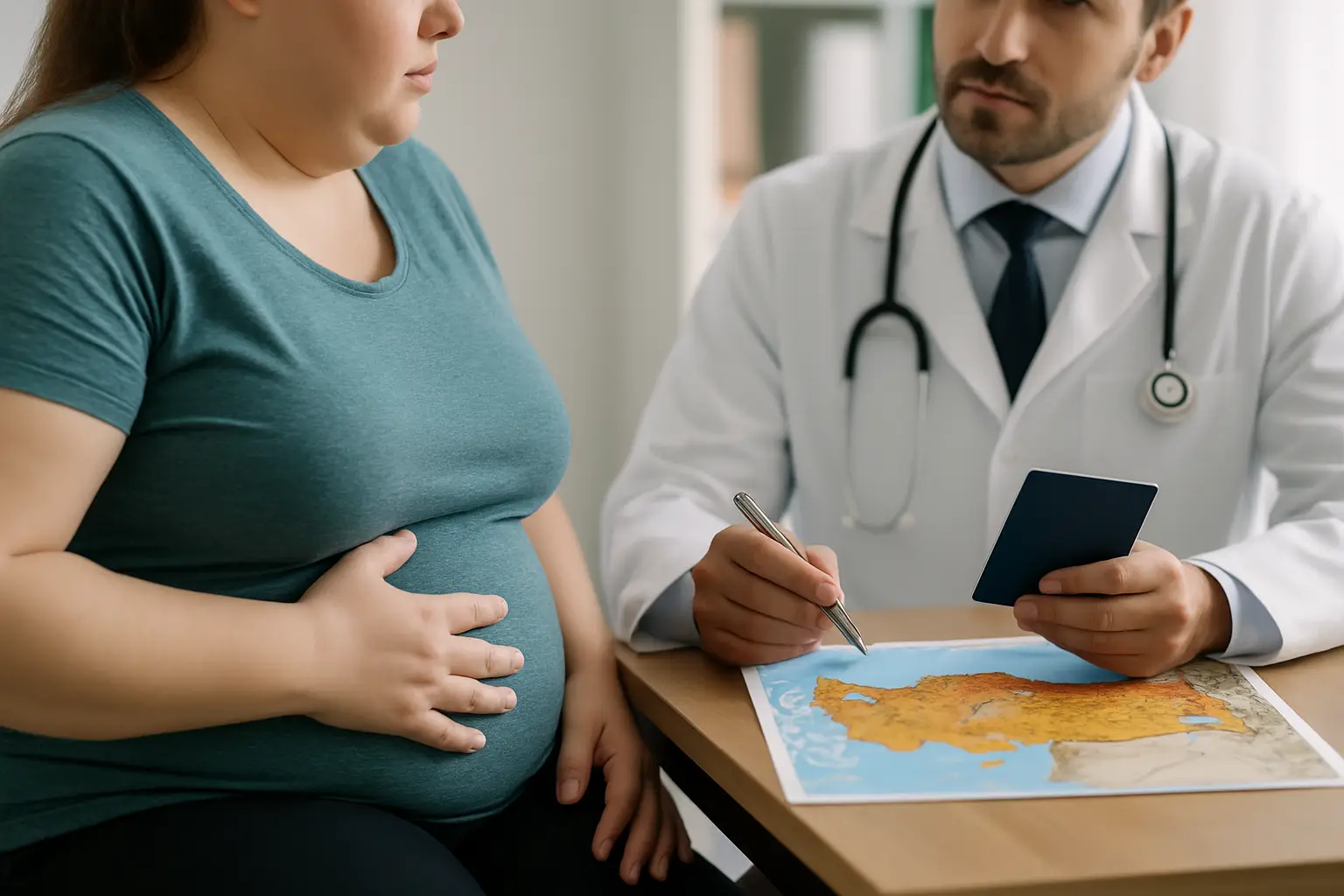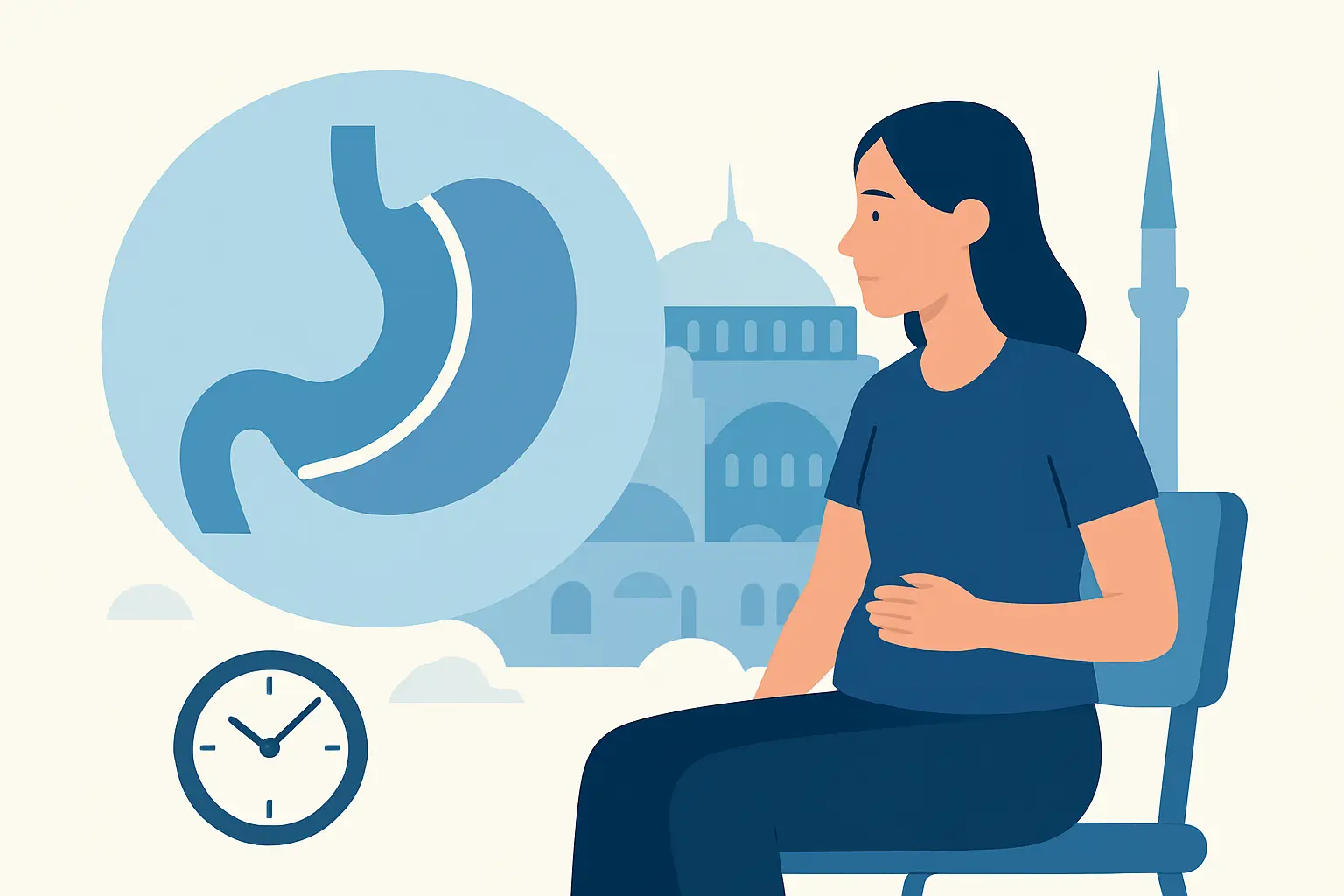

You have the flight tabs open, a short list of hotels, and one question that keeps circling back: how many days do I actually need in Turkey for a gastric sleeve – not the “minimum”, but the sensible amount that keeps you safe and calm.
For most international patients, the realistic answer is 7 to 10 nights in Turkey. Some people can do it in 5 to 6 nights if everything is straightforward and recovery is smooth. Others should plan 10 to 14 nights if they want extra breathing room, have a higher BMI, have medical complexity, or simply don’t want to feel rushed.
What matters is not just the number of nights. It is whether your stay gives you enough time for proper pre-op checks, safe early recovery, and a final medical sign-off before you fly.
How long stay in Turkey for gastric sleeve, realistically?
A gastric sleeve is major surgery. Even when it is done laparoscopically with an experienced bariatric team, your first few days are about pain control, mobilising safely, monitoring for early complications, and learning how to drink again in a brand-new way.
That is why most reputable programmes build in a short runway before surgery, a monitored hospital phase, and a few days afterwards nearby.
A common, sensible structure is:
- Arrival day
- Pre-op tests and final surgeon assessment
- Surgery day
- 2 to 3 nights in hospital (varies by surgeon and your clinical picture)
- 3 to 5 nights in a hotel close to the hospital for check-ups and support
- Fit-to-fly review, then travel home
If you are trying to decide between, say, one week and ten days, the best question is: Will I feel forced to travel while still fragile? Many people underestimate how tiring it can be to sit upright, manage fluids, and navigate airports only a few days after surgery.
The “typical” 7 to 10 night timeline (what happens when)
It helps to picture your stay as a medical pathway rather than a holiday.
Day 1: Arrival and settling in
Most patients arrive, check in, and focus on rest and hydration. You may feel tempted to explore, but the best use of this day is to get your body calm after travelling, eat lightly as advised, and sleep.
If you are travelling with a partner or family member, this is also the day to sort practicalities: pharmacy items, comfortable clothing, and any documents you need for the hospital.
Day 2: Pre-op assessments
This is where good programmes show their quality. Pre-op testing commonly includes bloodwork, ECG, and imaging as required, alongside an anaesthetist review and a final surgical consultation.
These checks are not box-ticking. They are how your team confirms you are safe for surgery, adjusts plans if needed, and answers last-minute questions about medications, reflux, liver size, and previous operations.
Day 3: Surgery day
You will be admitted, prepared for theatre, and monitored closely afterwards. Most patients feel groggy, bloated from surgical gas, and sore around the port sites. You will be encouraged to start gentle walking as soon as it is safe – it genuinely helps recovery.
Days 4 to 5: Hospital recovery
Hospitals vary, but many patients spend 2 to 3 nights inpatient. This period matters. Your team monitors vital signs, pain, nausea, urine output, and your ability to tolerate small sips. You will usually have guidance on breathing exercises, mobilisation, and what “normal” discomfort looks like.
If a swallow test is used by your surgeon, it may happen in this window.
Days 6 to 9: Hotel recovery near the hospital
This is the underestimated part of the trip. You are “well enough to leave hospital” but still early in recovery. You will likely feel tired quickly, your sleep may be patchy, and hydration can feel like a full-time job.
Being nearby means you can attend follow-up checks, get quick reassurance about symptoms, and adjust medications or anti-nausea support without panic.
Day 10: Final review and flying home
Before you fly, you want a clear medical green light, practical aftercare instructions, and confidence that you can manage the journey: walking through the airport, lifting nothing heavy, sipping regularly, and recognising warning signs.
This is also where patients often feel emotionally lighter. The hard part is done, and you have had time to practise your new routine.
When a shorter stay can be OK (5 to 6 nights)
A shorter trip is sometimes possible, but it should not be treated as the default. It generally works best when:
You have no significant medical issues, your pre-op tests are straightforward, you mobilise well immediately after surgery, nausea is minimal, and you are confident travelling soon after discharge.
The trade-off is simple: less time for observation and fewer opportunities to troubleshoot hydration, reflux sensations, constipation, or pain control while you still have your in-country team close.
If your main driver is cost or annual leave, it is still worth asking whether saving a couple of hotel nights is worth feeling rushed when your body is healing.
When to plan longer (10 to 14 nights)
Some patients are safer and happier with more time in Turkey. Common reasons include a higher BMI, sleep apnoea, previous abdominal surgery, anaemia or complex blood results, or a history of reflux where the surgical decision needs more nuance.
Longer stays can also make sense if you are an anxious traveller, if you are flying a longer route, or if you want your companion to feel less pressure managing logistics.
There is also a very human reason: many people want a few extra days to feel like themselves before facing work, family, and questions back home.
How flying home fits into the decision
Most patients can fly home after their surgeon confirms they are recovering normally and fit to travel. Practically, the challenges are not just the flight time – it is the full journey: queues, security, walking, sitting upright, and the mental load of managing fluids and discomfort.
If you tend to swell, have a longer flight, or feel prone to anxiety, you may prefer a longer stay so you travel when you are steadier.
Your team should also advise you on movement during the journey, hydration strategy, and what to avoid (for example, heavy lifting and rushing).
What you should not compromise on, even if you stay longer
Time in-country is only one part of safety. The more important question is whether your care pathway is properly structured. You want clear pre-op screening, a hospital that is set up for bariatrics, and accessible support after discharge.
That is where a coordinator-led model can reduce stress. With a concierge-style medical travel partner, your schedule, transfers, tests, and follow-ups are organised around your surgery rather than you trying to piece everything together whilst nervous and jet-lagged.
At Bridge Health Travel, patients typically follow a planned timeline that includes pre-op testing, hospital care, and aftercare check-ins, with a single coordinator who stays close to the details and responds quickly when questions pop up.
A simple way to choose your ideal length of stay
If you are stuck between two options, decide based on your recovery style, not your optimism.
If you recover quickly, tolerate discomfort well, and have a short flight home, 7 nights may be enough. If you like extra reassurance, have medical complexity, or want to avoid travelling while still tender and tired, 10 nights is often the sweet spot.
If you are looking at 5 to 6 nights, ask your provider exactly how they handle post-op reviews, who you contact after discharge, and what happens if nausea, dehydration, or unexpected pain shows up on day four.
The goal is not “get home fast”, it is “get home well”
You are doing this to change your health for the long term. Giving yourself a few extra days to recover properly is not indulgent – it is often the difference between a stressful trip and a steady, confident start.
A helpful way to frame it is this: plan your stay so you can leave Turkey feeling like you understand your new stomach, not like you are still trying to catch up with it.