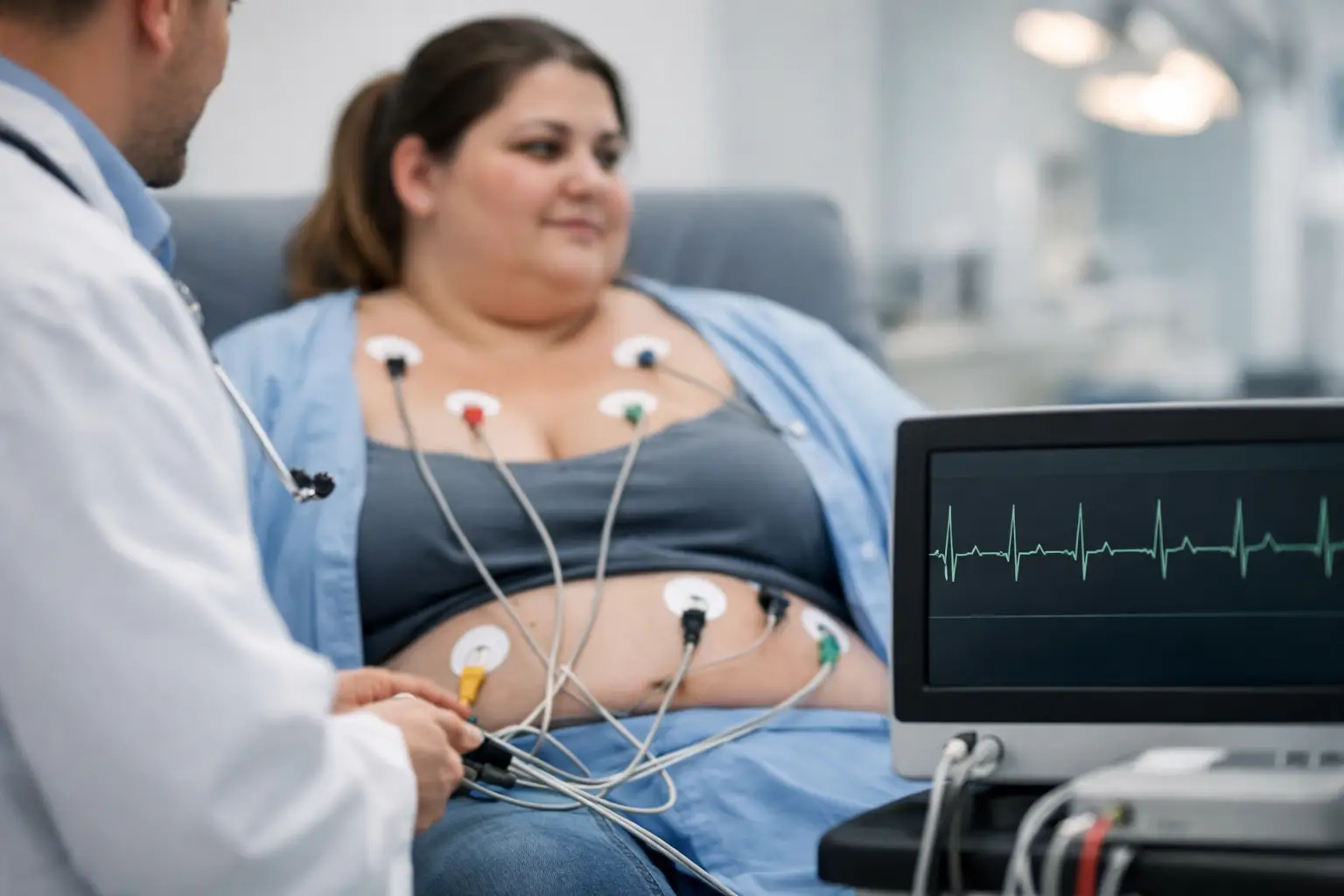

A pre-operative ECG can feel like one more box to tick when you are already arranging surgery, travel and time away from home. But understanding why bariatric patients need ECG can make the process far less worrying: it is a quick, painless test that gives the clinical team valuable information about how your heart is functioning before an anaesthetic and weight-loss procedure.
For many patients, the result is completely normal and the test takes only a few minutes. For others, it highlights something the team needs to understand better before surgery. Either way, the purpose is not to create delays. It is to make sure your treatment plan is appropriate for you.
Why bariatric patients need ECG before surgery
An ECG, short for electrocardiogram, records the electrical activity that controls your heartbeat. Small adhesive sensors are placed on your chest and limbs, then connected to a machine that produces a tracing of your heart rhythm. There are no needles, no radiation and no recovery time.
Bariatric surgery is performed under general anaesthetic. During surgery, your heart rate, blood pressure, oxygen levels and breathing are closely monitored. An ECG is one part of the pre-operative assessment that helps the anaesthetist and surgical team identify whether there may be a heart rhythm issue, evidence of a previous cardiac event, or a pattern that needs further review.
This matters because obesity can occur alongside health conditions that place additional strain on the heart. High blood pressure, type 2 diabetes, sleep apnoea, high cholesterol and reduced physical activity are all more common in people seeking bariatric treatment. Having one or more of these conditions does not automatically mean surgery is unsafe. It simply means the team should assess you properly and plan your care around your individual health needs.
What an ECG can tell the clinical team
An ECG does not provide a complete picture of heart health on its own. It is one useful piece of a wider clinical assessment, alongside your medical history, blood tests, examination and, where needed, additional investigations.
The tracing may help identify an irregular heartbeat, such as atrial fibrillation, or a conduction issue affecting how electrical signals travel through the heart. It can also show changes that may be associated with reduced blood flow to the heart muscle or an earlier, sometimes unrecognised, heart event. Some findings are longstanding and harmless, while others require a closer look.
The key point is context. A result that looks unusual may be entirely manageable when reviewed alongside your symptoms, medications and previous records. Equally, a normal ECG does not rule out every possible cardiac condition. That is why your surgeon and anaesthetist consider the whole assessment rather than relying on one test.
Anaesthetic safety is the central reason
Weight-loss surgery is not just about the operation itself. Safe care begins with knowing how your body is likely to respond to anaesthesia, surgery and recovery.
General anaesthetic can affect blood pressure, heart rate and breathing. Bariatric procedures may also involve specific positioning, changes in abdominal pressure and preventative medication to reduce the risk of blood clots. An ECG helps the anaesthetic team prepare for these factors and decide whether standard monitoring is suitable or whether extra precautions are sensible.
For example, a patient with controlled high blood pressure and a normal ECG may continue through the usual pre-operative pathway. A patient reporting chest pain, unexplained breathlessness, palpitations or fainting may need further assessment before an operation is confirmed. This may involve review by a cardiologist, an echocardiogram, an exercise-based test or changes to regular medication.
That can feel frustrating if you are eager to move forward, particularly after making the decision to have surgery. Yet a short pause to clarify a potential concern is far better than discovering it on the day of an operation. A responsible bariatric programme puts safety ahead of speed.
Who is most likely to need additional cardiac checks?
Pre-operative requirements vary according to age, medical history, planned procedure and hospital protocol. An ECG is often requested routinely for bariatric patients, but further cardiac testing is more likely if you have known heart disease, high blood pressure, diabetes, obstructive sleep apnoea or a family history of early heart problems.
Your team will also want to know if you experience symptoms such as chest discomfort, a racing or irregular heartbeat, dizziness, blackouts, swelling in the legs, or breathlessness that seems out of proportion to activity. Be open about these symptoms, even if they come and go or feel embarrassing to mention. Clear information allows your doctors to make the safest decision.
Bring a current list of your medicines, including blood pressure tablets, anticoagulants, diabetes medication, injections and supplements. Do not stop prescribed medicine because you are travelling for surgery unless your clinical team has specifically instructed you to do so. Some medicines need to be continued, some need timing adjustments, and others may need to be paused safely before surgery.
What happens if the ECG is abnormal?
An abnormal ECG is not the same as a cancelled operation. It means the result needs interpretation by the appropriate clinician. Sometimes the tracing is affected by sensor placement, movement or a known pattern that has no impact on anaesthetic safety. Repeating the ECG may be all that is required.
If there is a genuine concern, the next step depends on what the ECG shows and how you are feeling. The team may ask for past ECGs or letters from your GP or cardiologist, arrange an additional test, recommend medication optimisation, or postpone surgery until a condition is better controlled.
This is one of the reasons a well-organised pre-operative process matters when travelling abroad. You should not be left trying to translate medical language or coordinate hospital appointments on your own. At Bridge Health Travel, pre-operative testing is coordinated as part of the wider patient journey, with support to help you understand what is happening and what information the medical team needs.
How ECG fits into your bariatric surgery journey
Your ECG is normally completed with other checks before surgery, which may include blood tests, a chest assessment, vital signs, review of medications and consultation with the anaesthetist. The exact schedule differs between patients and procedures, but the aim is the same: to identify risks early and make sure the hospital team has a clear picture before you enter theatre.
For international patients, it is helpful to prepare before travelling. Share an accurate medical history during your initial assessment, including previous operations, hospital admissions, heart tests and any episodes of anaesthetic complications. If you have been under a cardiologist, ask for a recent letter or test results if available. These records can prevent unnecessary uncertainty and help the team make decisions promptly.
You may be asked to avoid certain foods, drinks or medicines before your operation. Follow these instructions exactly, even if they differ from advice you have had for another procedure in the past. Pre-operative guidance is tailored to the surgery, the anaesthetic plan and your medical profile.
Questions worth asking before your ECG
A good care pathway gives you room to ask questions rather than simply handing you a list of tests. You may want to ask when your ECG will take place, whether you need to bring previous cardiac records, and who will discuss an unexpected result with you. If you take blood thinners, heart medication or injections for diabetes, ask for clear written instructions about what to take on the morning of surgery.
It is also reasonable to ask how an abnormal result would affect your travel plans. In many cases it will not. If more review is needed, knowing the process early helps you and anyone travelling with you feel prepared rather than alarmed.
A small test with a meaningful purpose
The ECG itself is usually one of the simplest parts of preparing for bariatric surgery. Its value lies in what it allows the clinical team to do: spot concerns early, tailor anaesthetic care and avoid making assumptions about your heart health.
Your role is equally straightforward but important. Give a full medical history, report symptoms honestly and follow the instructions provided by your surgical team. When every part of the assessment is handled carefully, you can focus less on uncertainty and more on preparing for the healthier, more active life you are working towards.