
For patients who feel anxious about a procedure, the question does gastric balloon need anaesthesia is often as important as questions about weight loss itself. The short answer is: it depends on the type of balloon and how it is placed. Many gastric balloons are inserted using sedation rather than a full general anaesthetic, while swallowable balloons may not require either. Your clinical team will recommend the safest, most comfortable option after reviewing your medical history.
Does a gastric balloon need anaesthesia for placement?
There are two main ways a gastric balloon may be placed, and the anaesthesia requirements are different for each.
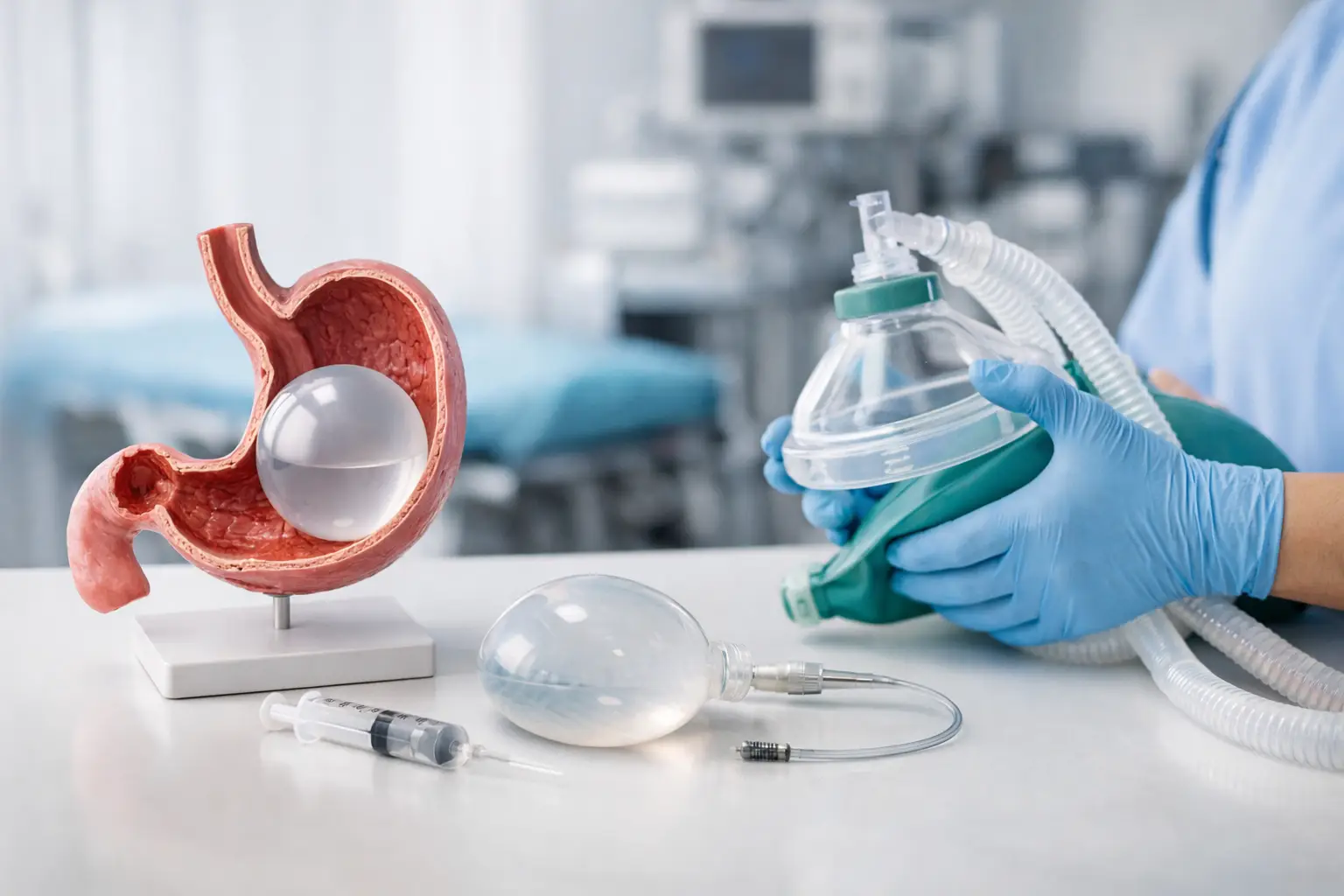
An endoscopic gastric balloon is inserted through the mouth using a thin flexible camera called an endoscope. Because the camera passes through the throat and into the stomach, patients are usually given sedation. Depending on the hospital protocol, the balloon system used and your individual health needs, this may be conscious sedation, deeper intravenous sedation, or occasionally general anaesthesia.
With conscious or intravenous sedation, you are very relaxed and sleepy. Many people remember little or nothing of the procedure afterwards, but they may continue breathing independently. General anaesthesia means you are fully asleep and your breathing is managed by the anaesthetic team. It is not automatically necessary for every endoscopic balloon placement, but it can be appropriate in certain circumstances.
A swallowable gastric balloon is different. You swallow a capsule containing the deflated balloon, usually with water, and its position is checked before it is filled. There is no endoscope involved, so sedation and general anaesthesia are usually not needed. This can make the placement appointment quicker, although it does not mean it is right for everyone.
Why sedation is commonly used for endoscopic balloons
Endoscopic insertion is normally brief, often taking around 20 to 30 minutes, but comfort still matters. Sedation reduces the gag reflex, helps you relax and allows the clinical team to place the balloon carefully. It can be especially reassuring for people who have a strong fear of endoscopy or who are worried about being awake during the procedure.
The goal is not simply to make the experience easier. Good sedation planning supports a controlled procedure, with monitoring throughout. Your oxygen levels, heart rate and blood pressure are checked, and a trained anaesthesia professional is present according to the hospital’s protocol.
Some patients are suitable for light or moderate sedation. Others may need deeper sedation or general anaesthesia because of severe anxiety, a difficult airway, obstructive sleep apnoea, significant reflux, previous complications with sedation, or other medical factors. There is no one-size-fits-all answer, which is why a proper pre-procedure assessment is essential.
What about gastric balloon removal?
For most endoscopic balloon systems, removal also requires an endoscopy. The balloon is deflated, grasped and removed through the mouth. Sedation is generally used again, and the same considerations apply. Some clinics may use general anaesthesia for removal, particularly if this is their standard safety protocol or if a patient’s assessment indicates that it is preferable.
Swallowable balloons are designed differently. Certain models are intended to deflate after a set period and pass naturally through the digestive system, so they do not need an endoscopic removal procedure. Your team should explain exactly what happens at the end of treatment before you commit to a particular balloon programme.
It is worth asking this question early. A balloon that seems less invasive at placement may have a different removal process, follow-up schedule and suitability profile than another option. The best choice is the one that fits your clinical needs, weight-loss goals and ability to follow the aftercare plan.
The checks that make anaesthesia safer
Anaesthesia and sedation are not decided on the day without preparation. Before a gastric balloon procedure, the clinical team should review your health history, current medicines, allergies and previous experiences with anaesthesia. You may also have blood tests, an ECG and other checks where appropriate.
Be completely open about conditions such as asthma, sleep apnoea, heart disease, diabetes, liver disease, reflux, anxiety, and any history of nausea after anaesthesia. Also mention if you take blood thinners, weight-loss injections, diabetes medication, sleeping tablets, opioid pain medicines or supplements. Some medicines may need to be paused or adjusted, but only under medical instruction.
Fasting instructions matter just as much. You will usually need to stop eating and drinking for a specified period before an endoscopic procedure. This reduces the risk of stomach contents entering the airway while you are sedated. Follow the exact instructions given by your hospital, rather than relying on general advice from friends or online forums.
For international patients, these details can feel harder to manage when travel is involved. A coordinated pathway should make the sequence clear: pre-operative checks, hospital admission, the procedure itself, recovery monitoring and transport back to your accommodation. You should never feel rushed into treatment before the clinical team has confirmed that you are fit to proceed.
What recovery feels like after sedation or anaesthesia
After sedation, you will spend time in a recovery area while the effects wear off. It is common to feel drowsy, slightly unsteady or foggy for the rest of the day. You should not drive, make important decisions, drink alcohol or be left without appropriate support immediately after the procedure.
If you are travelling for treatment, this is one reason accompanied transfers and a clear recovery plan are valuable. A responsible team will make sure you are well enough to leave the hospital, explain your medicines and give you a way to contact support if you feel unwell.
The early symptoms from the balloon itself can be more noticeable than the effects of sedation. Nausea, stomach cramps, bloating and vomiting are relatively common during the first few days while the stomach adapts. Prescribed anti-sickness and stomach-protection medicines, hydration and following the staged diet closely can make this period more manageable.
Seek urgent medical advice if you have severe or persistent abdominal pain, repeated vomiting that prevents you from keeping fluids down, chest pain, breathing difficulty, black stools, fever, or symptoms that feel significantly worse than expected. These symptoms do not always mean there is a serious complication, but they should never be ignored.
Questions to ask before choosing your balloon
You deserve a clear answer to more than just whether you will be asleep. Ask which balloon is being recommended and why, whether it is placed and removed endoscopically, what type of sedation is planned, and who will provide it. You can also ask what monitoring is used, how long you will remain under observation, and what support is available after you leave the hospital.
It is sensible to discuss the weight-loss programme around the balloon as well. A gastric balloon is a temporary tool that helps with portion control and appetite habits. Results depend on nutrition, activity, behavioural support and follow-up, not the device alone. For some people it is a helpful first intervention; for others, a longer-term bariatric procedure may be more suitable.
At Bridge Health Travel, the purpose of coordinator support is to remove avoidable uncertainty from that decision. Your surgeon and anaesthesia team make the clinical recommendations, while your coordinator helps ensure you understand the plan, appointments and recovery arrangements.
A gastric balloon should feel like a considered step forward, not a leap into the unknown. Once you know which balloon you are having and how it is placed, the anaesthesia question becomes much clearer – and you can focus on preparing calmly for the changes ahead.