
For many people considering weight-loss surgery, the question “are bariatric scars permanent?” sits alongside concerns about safety, recovery and whether they will feel comfortable in their body afterwards. It is a fair question. Surgery can be life-changing, but you deserve a clear picture of the visible changes as well as the health benefits.
The short answer is that bariatric surgery scars are usually permanent in the medical sense: the skin has healed after an incision, so it will not return to exactly how it was before. However, most scars from modern laparoscopic surgery become much flatter, paler and less noticeable over time. For many patients, they fade to small marks that are easy to live with and often hidden beneath everyday clothing.
Are bariatric scars permanent after keyhole surgery?
Most gastric sleeve, gastric bypass and mini gastric bypass procedures are performed laparoscopically, often called keyhole surgery. Rather than one large incision, the surgeon makes several small openings in the abdomen to place the camera and surgical instruments. The number, size and position of these incisions depend on your procedure, anatomy and the surgeon’s clinical judgement.
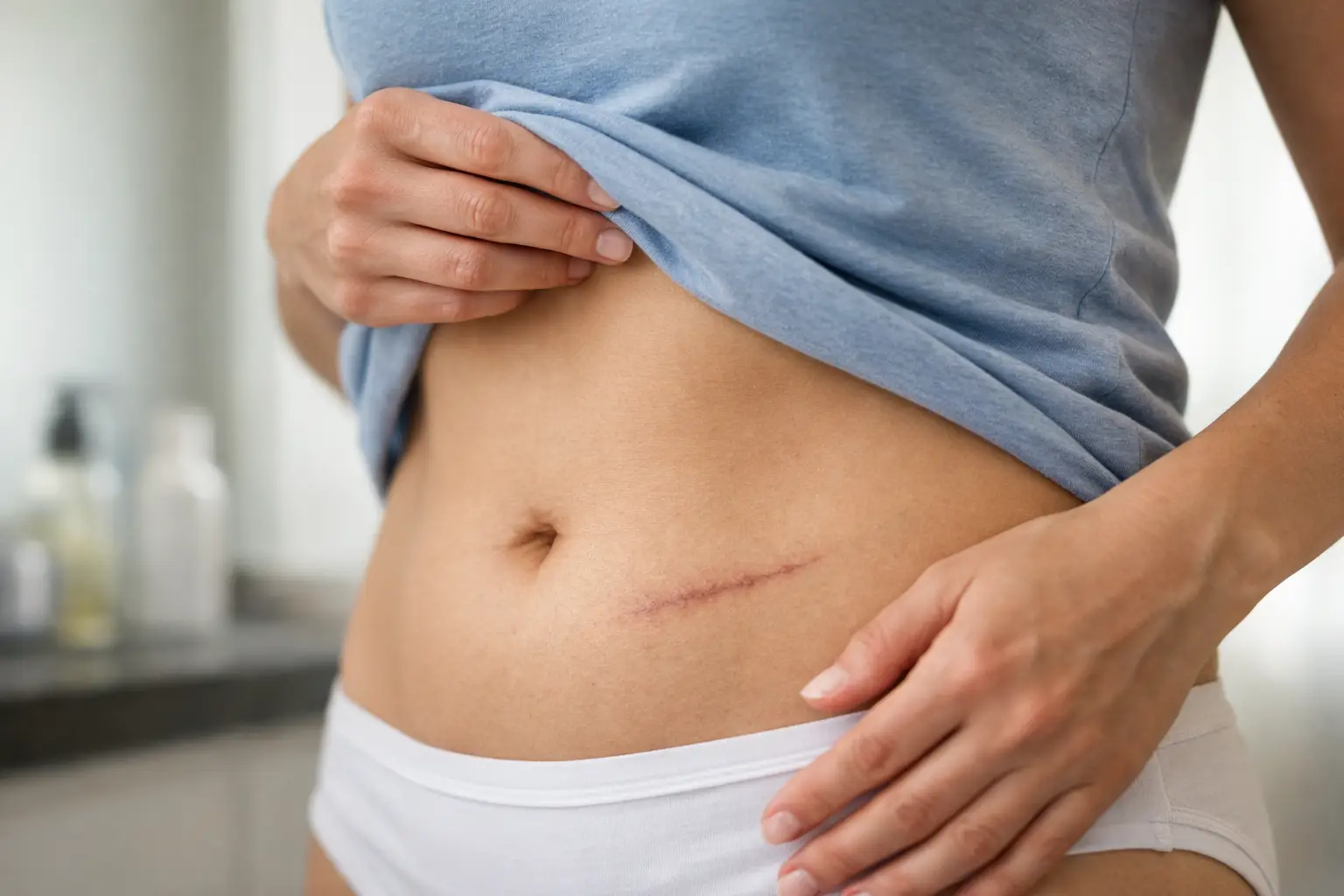
At first, the wounds may look more obvious than expected. They can be red, pink, raised or slightly firm as the body lays down collagen to repair itself. This is a normal early stage of healing, not a sign that the scars will stay that way.
In the following months, scars usually begin to soften and fade. The remodelling process can continue for 12 to 18 months, and occasionally longer. A scar that appears dark or prominent at six weeks is not necessarily its final appearance. This is one reason your post-operative team will focus first on safe wound healing rather than quick cosmetic results.
A small scar remains because an incision has been made, but its visibility varies considerably. Some people are left with fine, pale lines or tiny dots. Others notice more colour contrast or texture, particularly on the abdomen. Neither experience says anything about the success of the procedure or the amount of weight you may lose.
What affects how bariatric scars heal?
Your body’s own healing pattern has a major role. Genetics influence whether you tend to develop fine scars, thicker raised scars or changes in skin pigment. People with a personal or family history of keloid scars should raise this during their consultation. A keloid grows beyond the original wound edge, while a hypertrophic scar stays within the original wound area but may be raised, red and itchy.
Skin tone can also affect how a scar looks while it matures. Some scars temporarily become darker than the surrounding skin, while others look lighter. Sun exposure can make colour differences more noticeable, particularly during the first year.
The way the wound heals matters too. Infection, delayed healing, friction from clothing, smoking, poor protein intake and uncontrolled diabetes can all affect the result. This is why pre-operative assessment, hospital hygiene and clear discharge instructions are not minor details. They are part of protecting your recovery.
Rapid weight loss may change the appearance of your abdomen over time, but it does not normally make incision scars disappear or automatically worsen them. As your body shape changes, the placement of a scar can look slightly different. If you later choose body-contouring surgery for loose skin, that procedure involves its own scars and should be considered separately with an appropriately qualified surgeon.
What about a scarless gastric sleeve?
The phrase “scarless gastric sleeve” can be reassuring, but it needs a careful explanation. It generally refers to an endoscopic sleeve gastroplasty or another procedure performed through the mouth, rather than a conventional surgical sleeve gastrectomy performed through abdominal incisions.
Because no abdominal cuts are made, there are no external abdominal scars from the procedure itself. That does not mean it is the same operation, or that it is suitable for every patient. The expected weight loss, eligibility criteria, technique and long-term considerations differ from laparoscopic gastric sleeve surgery.
A responsible consultation should never present scarless treatment as simply a cosmetic version of a surgical sleeve. The right procedure depends on factors such as your BMI, medical history, eating patterns, previous operations and weight-loss goals. Your clinical team should talk you through those differences plainly, without pressure.
Supporting healthy scar healing after surgery
The first priority is always to follow the instructions given by your surgeon and ward team. Keep dressings and wounds clean and dry exactly as advised, and do not apply creams, oils or silicone products until the incision has fully closed and your team has said it is appropriate. Well-meaning advice from social media is not a substitute for individual post-operative guidance.
Once your wounds have healed, protecting them from direct sunlight is sensible. Covering scars or using high-factor sun protection can help prevent prolonged darkening. If silicone gel or sheets are recommended for you, use them consistently and according to the product and clinical advice. Gentle scar massage may also be suggested later in recovery, but only when the area is fully healed and not tender, open or inflamed.
Nutrition supports repair from the inside. Meeting your protein target, taking prescribed vitamins and minerals, drinking enough fluid, and avoiding smoking give your body better conditions for healing. These habits also support the broader recovery work after bariatric surgery, including maintaining muscle mass and adapting to a new way of eating.
It is worth being patient with yourself here. Looking at fresh incisions every day can make it feel as though nothing is changing. Taking a photograph once a month, in similar lighting, often gives a more realistic view of gradual fading than daily checking.
When should you ask for medical advice?
Some discomfort, mild bruising and redness around a new incision can be expected. But contact your surgical team promptly if redness is spreading, pain is getting worse rather than improving, the wound opens, there is pus-like discharge or a bad smell, or you develop a fever. These symptoms need clinical assessment, especially soon after surgery.
You should also speak to your team if a healed scar becomes increasingly raised, tight, painful or very itchy. Scar treatments can be more effective when concerns are addressed early. Depending on the type of scar, a clinician may suggest silicone therapy, pressure treatment, steroid injections, laser treatment or referral to a dermatologist or plastic surgeon. Not every mark needs treatment, but you should not feel that you must simply put up with a scar that is uncomfortable or causing distress.
For patients travelling abroad for surgery, this is where organised aftercare matters. Before you travel home, you should understand who to contact, what photographs or symptoms to send if you are worried, and how follow-up will work once you are back in the UK or Ireland. A good coordinator helps you feel supported, but clinical concerns should always be reviewed by the appropriate medical professional.
Keeping scars in perspective
It is completely valid to care about scars. They are a visible reminder of a significant decision, and it can take time to adjust to seeing them. At the same time, many patients find that the marks become a small part of a much bigger story: moving more easily, managing health conditions more effectively, feeling more present in daily life, or having the energy to join family activities.
Try not to judge the final result in the early weeks. Give your body time, attend your follow-up checks and ask questions whenever something does not feel right. The best path forward is not pretending scars do not matter – it is having honest expectations and the right clinical support while you heal.