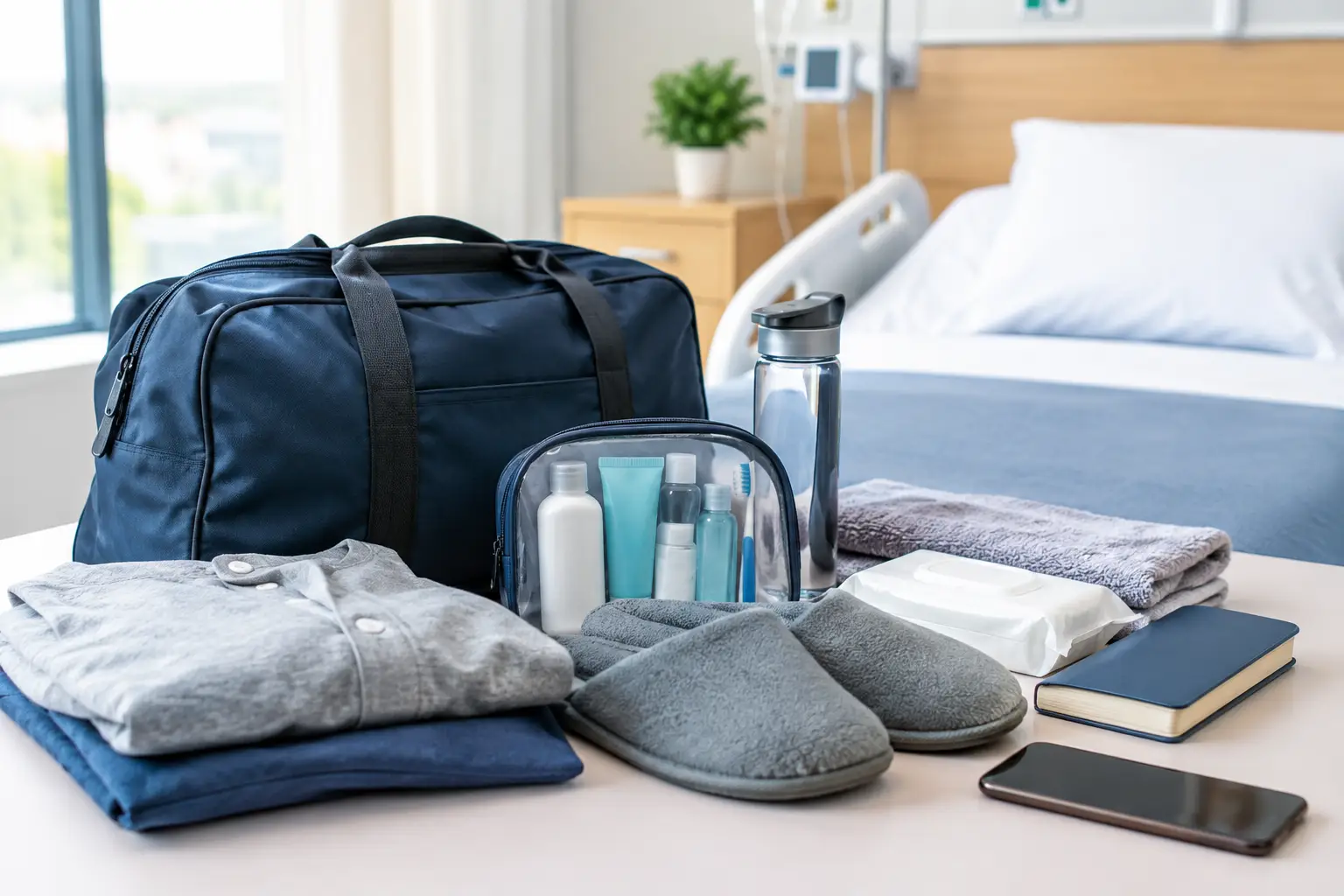

The night before bariatric surgery, most patients are not worrying about whether they packed enough clothes. They are wondering whether they have missed something that could delay admission, make communication harder or leave them uncomfortable after surgery. A thoughtful bag of essential items for hospital admission will not remove every pre-operative nerve, but it can make the day feel far more organised.
For patients travelling to Antalya, the goal is not to pack for every possibility. Hospitals provide clinical essentials, and a well-coordinated admission process should keep the practical steps clear. Your job is to bring what helps the clinical team identify you, understand your health and support your comfort as you begin recovery.
Start with your hospital instructions
Every bariatric procedure, hospital and patient is different. Your surgical team’s written guidance always takes priority over a general packing list, particularly if you have diabetes, use a CPAP machine, take prescription medication or have complex medical history.
Keep your admission bag separate from your suitcase if possible. A small holdall that can stay within reach is much easier to manage than searching through holiday luggage after a transfer or during pre-operative testing. Your coordinator can also confirm what the hospital supplies, what your room includes and whether a companion may stay with you.
Do not pack food, supplements or herbal remedies unless your team has specifically approved them. Even products that seem harmless can affect anaesthesia, bleeding risk or your pre-operative fasting instructions.
Essential items for hospital admission: documents first
Paperwork is not glamorous, but it is the part of your bag most likely to affect a smooth arrival. Store documents together in a slim folder or waterproof pouch, with digital copies on your mobile phone as a back-up. Keep it simple and easy to hand over.
Bring the following:
- Your passport, travel details and any hospital booking or admission confirmation.
- A current list of medicines, including doses, timing and the reason you take each one.
- Details of allergies, previous operations, medical conditions and your usual GP or specialist.
- Your insurance information, if relevant to your arrangements, plus an emergency contact’s number.
- Your glasses, hearing aids or other essential aids, with a protective case and spare batteries where needed.
If English is not your first language, it can help to have your medical information written clearly in English before you travel. At Bridge Health Travel, patients are supported by a coordinator and translation assistance during the hospital process, but a concise medicine list remains useful for everyone involved in your care.
Pack for comfort, not for a fashion show
After bariatric surgery, loose, soft clothing is usually more comfortable than fitted waistbands or anything that presses on your abdomen. Choose a clean outfit for admission and a separate loose outfit for discharge. A front-opening top or pyjamas can be easier to put on than clothing pulled over your head, especially while you are moving carefully.
Comfortable slip-on footwear with a secure sole is another sensible choice. Early, gentle walking is commonly encouraged by the hospital team to support circulation and recovery, so you want shoes that are easy to wear without bending or fussing with laces. Avoid loose slippers that could increase your risk of slipping.
A few familiar toiletries can make a private room feel less clinical. A toothbrush, toothpaste, lip balm, hairbrush, deodorant and moisturiser are usually enough. Lip balm is especially welcome when fasting, oxygen therapy or dry hospital air leaves your lips uncomfortable. Keep fragrances light, as anaesthesia and nausea can make strong smells unpleasant.
You may also appreciate a mobile phone charger with a long cable, headphones, a small book or downloaded entertainment. Rest is often interrupted by observations, medication rounds and staff visits, so think of these as quiet distractions rather than a full day’s plan. Keep valuables to a minimum. Jewellery, expensive watches and large amounts of cash are best left at home or secured safely.
Medicines and medical equipment need a plan
Bring prescription medicines in their original labelled packaging, not loose in a pill organiser. This makes it easier for the clinical team to confirm exactly what you use. However, do not take any medication at your usual time unless the anaesthetist, surgeon or nurse has told you to do so. Some medicines must be stopped, adjusted or taken with only a small sip of water before surgery.
If you use a CPAP device for sleep apnoea, ask your coordinator or hospital team in advance whether to bring it and how it will be managed. The same applies to insulin, injectable medicines, blood glucose monitors, mobility aids and any specialist equipment. These are not items to decide on at the airport.
Vitamins, protein powders and non-prescription painkillers also need checking. Bariatric surgery changes how you will eat, drink and take supplements during the first stages of recovery. What was routine before surgery may not be appropriate on admission day or immediately afterwards.
What not to put in your admission bag
Overpacking can create its own stress. You do not need a large supply of snacks or drinks, and you should never assume you can eat or drink because you feel thirsty or nervous. Fasting rules are there to keep anaesthesia safer. Follow the timing given by your clinical team exactly, even if it differs from advice you have seen elsewhere.
Leave behind alcohol, nicotine products, unapproved medication and bulky items that you will not use in hospital. Nail polish, gel nails and false nails may need to be removed before your procedure, depending on hospital policy and how oxygen monitoring is carried out. Ask before travelling rather than making a last-minute appointment change.
It is also wise not to wear contact lenses for surgery. Bring your glasses instead. If you wear dentures, retainers or removable piercings, mention them during admission so staff can advise you on safe storage and removal.
Prepare your travelling companion as well
A supportive partner, relative or friend can make a real difference, but they need practical information too. Make sure they know the hospital name, how to contact your coordinator, your expected procedure date and where they will stay while you are admitted. They should have a copy of your emergency contact details and understand that clinical updates may be shared only with your consent.
For many patients, the most helpful companion is not someone trying to solve every problem. It is someone who can listen, keep your belongings together, remind you of agreed instructions and encourage you to rest. Recovery begins with small steps: drinking as advised, walking with the team’s guidance and letting the nurses know if you feel pain, nausea, dizziness or worry.
Make the final check calm and practical
Lay out your documents, medication and comfort items the day before you leave for hospital. Charge your mobile phone, place your passport where it cannot be forgotten and wear loose clothing to admission. If anything on the list is unclear, ask your coordinator before the day of surgery rather than guessing.
The best hospital bag is not the fullest one. It is the one that lets you arrive prepared, communicate clearly and place your attention where it belongs: on your care, your recovery and the life you are working towards after surgery.